-
- Photo Tourism NT

-
- Photo Tourism NT
Kakadu National Park
Kakadu National Park is one of Australia’s most extraordinary natural and cultural destinations. Located in the Northern Territory east of Darwin, Kakadu is World Heritage-listed for both its remarkable landscapes and its living Aboriginal culture.
Covering almost 20,000 square kilometres, Kakadu is a region of sandstone escarpments, wetlands, rivers, monsoon forests, waterfalls and ancient rock art. It is one of the most diverse national parks in Australia and an important place of deep cultural significance.
Where Is Kakadu National Park?
Kakadu National Park lies around three hours east of Darwin in Australia’s Northern Territory. The township of Jabiru is located within the park and is a convenient base for exploring many of Kakadu’s major attractions.
Kakadu borders Arnhem Land and forms part of the traditional Country of the Bininj/Mungguy people, whose connection to this land continues today and remains central to the visitor experience.
Why Kakadu National Park Is So Special
Kakadu is recognised internationally for the scale and diversity of its landscapes. Within a single destination, visitors can experience floodplains, billabongs, rugged escarpments, paperbark swamps, monsoon forests and seasonal waterfalls.
It is also one of Australia’s most significant cultural landscapes. Aboriginal people have lived in this region for tens of thousands of years, and their stories, traditions and knowledge remain deeply woven into Kakadu today.
Aboriginal Culture and Rock Art
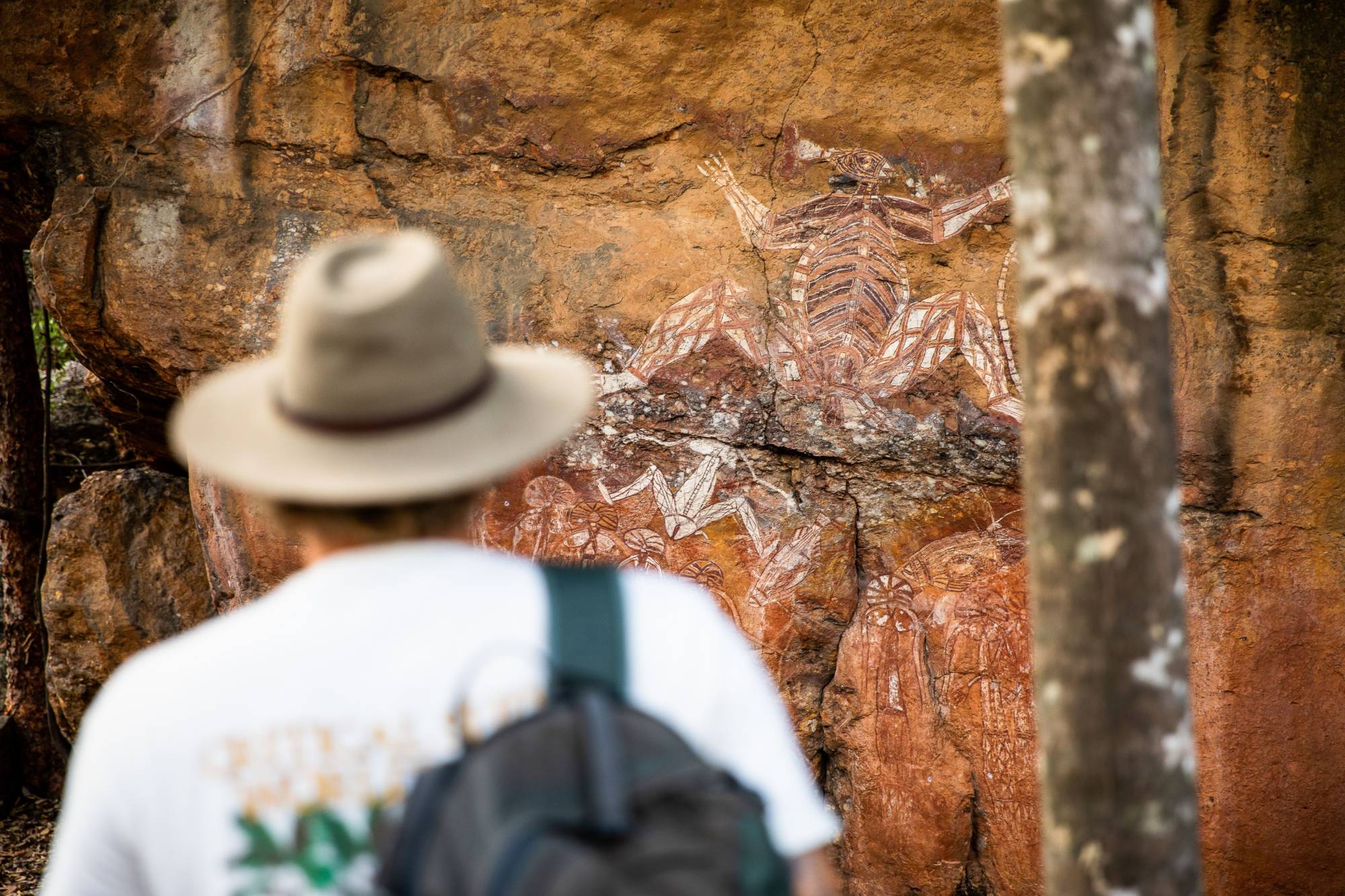
One of the most important reasons Kakadu is known around the world is its ancient Aboriginal rock art. The park contains some of the most significant rock art sites in Australia, with artworks that record stories, law, spirituality and daily life over thousands of years.
Well-known sites include Ubirr and Nourlangie, where visitors can see rock shelters, galleries and spectacular views across the surrounding landscape.
Landscapes and Wildlife
Kakadu is home to an incredible range of habitats and wildlife. Its wetlands support large numbers of bird species, while the rivers and floodplains are home to saltwater crocodiles, fish, buffalo and other native and introduced animals.
Across the park, visitors will find dramatic escarpments, quiet billabongs, giant termite mounds, walking tracks and seasonal swimming areas. This variety is one of the reasons Kakadu appeals to nature lovers, photographers, birdwatchers and first-time visitors alike.
Major Attractions in Kakadu
- Ubirr for Aboriginal rock art and panoramic floodplain views
- Nourlangie for cultural interpretation and ancient galleries
- Yellow Water Billabong for wildlife cruises and wetland scenery
- Jim Jim Falls for one of Kakadu’s most iconic landscapes
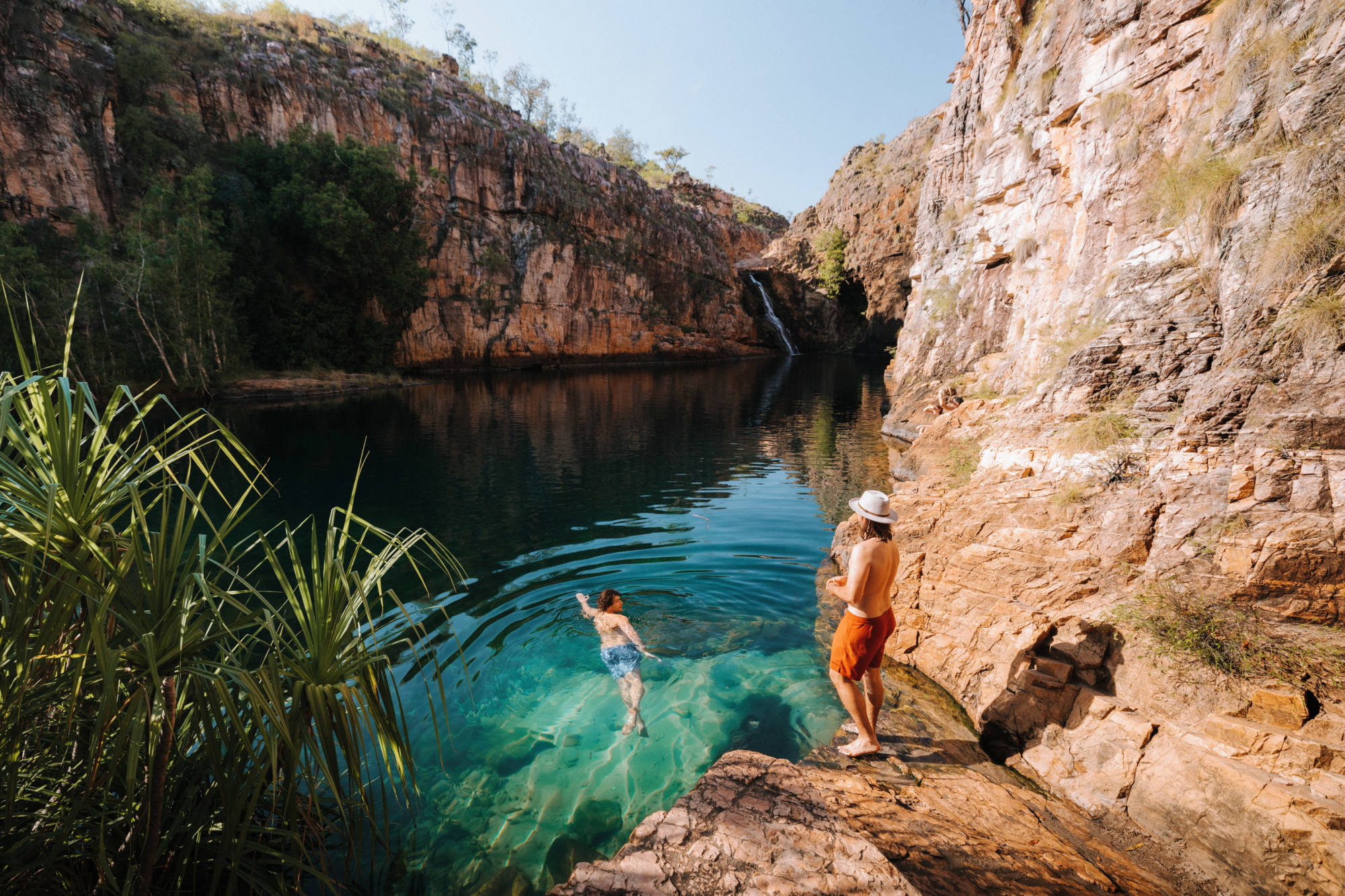
- Maguk for a natural plunge pool and scenic bush setting
- Gunlom is a popular Kakadu waterfall with a large plunge pool for swimming and natural infinity pool
- Guluyambi Cultural Cruise for cultural insight on the East Alligator River
- Scenic flights for an aerial perspective of Kakadu’s vast scale
Experiencing Kakadu
Visitors come to Kakadu for many different reasons. Some are drawn by the rock art and cultural significance, others by the wetlands, wildlife, waterfalls and dramatic outback scenery. Popular ways to experience the park include guided walks, cruises, scenic flights, cultural tours, fishing charters and multi-day touring.
Because Kakadu is such a large and varied national park, each visit can be quite different depending on the season, how much time you have and which areas are accessible.
Kakadu National Park and Arnhem Land
Kakadu and Arnhem Land are closely connected geographically and culturally, but they are not the same destination. Arnhem Land is a separate Aboriginal-owned region bordering Kakadu and access is restricted in many areas. Some visitors choose to combine both regions for a broader Top End experience.
Planning a Visit to Kakadu
If you are planning a trip, it is important to allow enough time to appreciate the scale of the park. Seasonal access, road conditions and distances between attractions can all affect what you are able to see.
For practical advice on the best time to visit, where to stay, self-drive tips and how to choose the right tour, read our Kakadu Travel Guide.
Explore Kakadu Tours
If you would prefer to experience Kakadu with local knowledge and a well-planned itinerary, you can also browse our Kakadu tours from Darwin.

